

Somewhere between late-night scrolling and unfinished sketches, a quiet myth takes shape.
It tells us that toppers are built differently, that they were born gifted, fearless, untouched by doubt. That their hands never tremble, their ideas never run dry, their confidence never cracks. This myth quietly grows stronger during long hours of NIFT, NID & UCEED preparation, while choosing courses, comparing coaching styles, and watching others seem “ahead” in the design entrance race.
But the real truth is softer. Less cinematic. Far more comforting.
Toppers are not extraordinary beings. They are ordinary students who chose to stay when leaving felt easier. They are people who still believe in the old ways of learningpractice, patience, repetition, in a world constantly chasing shortcuts.
Sit with toppers long enough and you’ll notice something almost poetic about them. They don’t rush the process. They don’t treat preparation like a countdown clock, but like a relationship that needs daily care. They understand that design entrance exams aren’t something you conquer. They’re mirrors, reflecting how you think, how you observe, how you respond to the world. And mirrors don’t lie.
Most aspirants prepare from a place of fear, fear of lagging behind, fear of not being creative enough, fear of missing out. They prepare with an aspiration to tell the world that they belong to a big brand like National Institute of Design, National Institute of Fashion Technology, or an Indian Institutes of Technology.
(Result-oriented thinking.)
But toppers prepare from curiosity.
They ask quieter, deeper questions:
Why does this work?
What story is this form telling?
How could it be better?
They don’t chase perfection. They chase understanding and progress.
They Turn Preparation Into a Daily Ritual, Not a Temporary Phase
One difference stands out, subtle but powerful.
Toppers don’t prepare only when the exam feels close. They don’t switch effort on and off. Preparation weaves itself into their everyday life. Sketching isn’t a task; it’s a habit. Observation isn’t homework; it’s instinct.
They draw a little every day, even when the lines feel awkward. They jot down ideas even when they sound foolish. They gather inspiration the old-fashioned way, by living fully. A crowded market becomes a lesson in spatial flow. A childhood memory becomes a design narrative.
They don’t wait for the “right mood.”
They show up anyway.
That kind of consistency is quiet. Boring, even. But it builds real skill.
Don’t wait for the right time to come to you, make the right time yourself. It can be anytime, anywhere, at any moment.
They Respect Drawing as a Language, Not a Talent
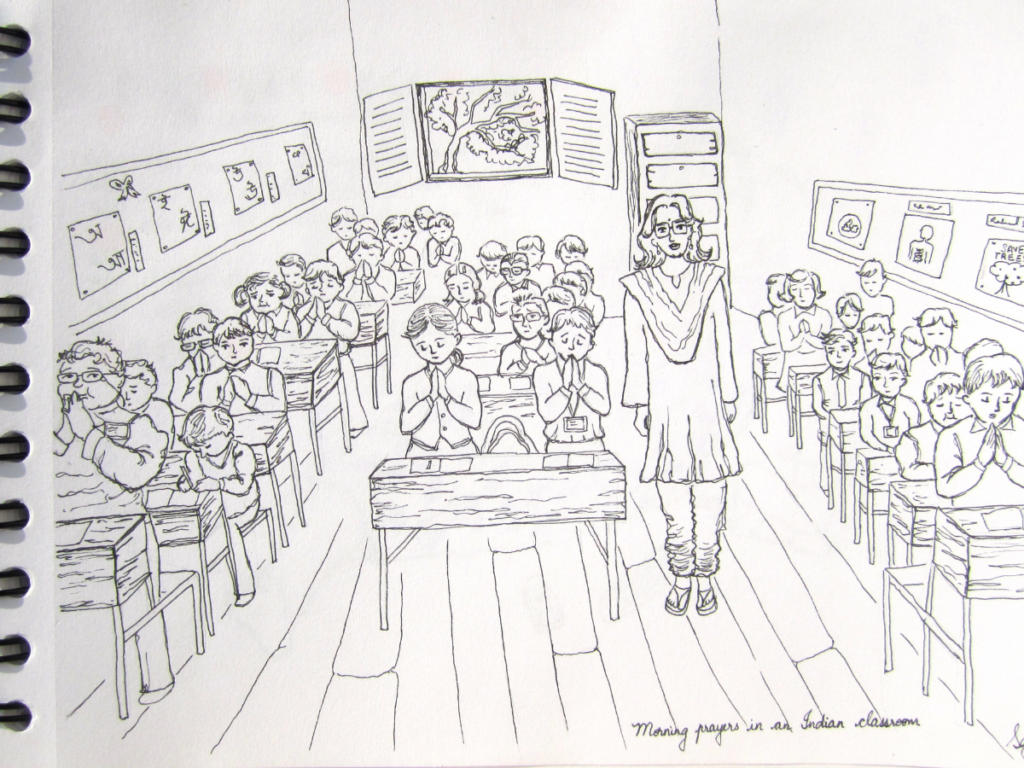
Many students treat drawing like a lottery, either you have it or you don’t.
Toppers see it differently.
To them, drawing is a language. And like any language, fluency comes only through daily use.
Their early sketches are messy. Proportions slip. Perspectives collapse. Instead of hiding these pages, they study them. They understand an old truth: improvement doesn’t come from avoiding mistakes, but from meeting them every day.
They focus less on making drawings beautiful and more on making them clear.
Can this sketch explain an idea?
Can it communicate intent?
Over time, beauty follows clarity.
They don’t compare their first page to someone else’s finished portfolio. They compare today’s work to yesterday’s. That’s how growth stays honest.
They Learn to Think Before They Answer
Design entrance questions aren’t traps. They’re invitations.
Toppers treat them that way. They don’t rush. They pause. They read slowly. They ask what the question is really testing, observation, empathy, logic, storytelling, innovation.
That pause is sacred. It’s where originality begins.
Sometimes you need time with yourself, where you think before saying or doing anything. This helps you retain things better.
While others panic over unpredictability, toppers stay grounded because they’ve practiced thinking, not memorising. They don’t guess answers. They build them. Their solutions feel fresh not because they’re flashy, but because they’re thoughtful.
They Train Observation Like a Muscle
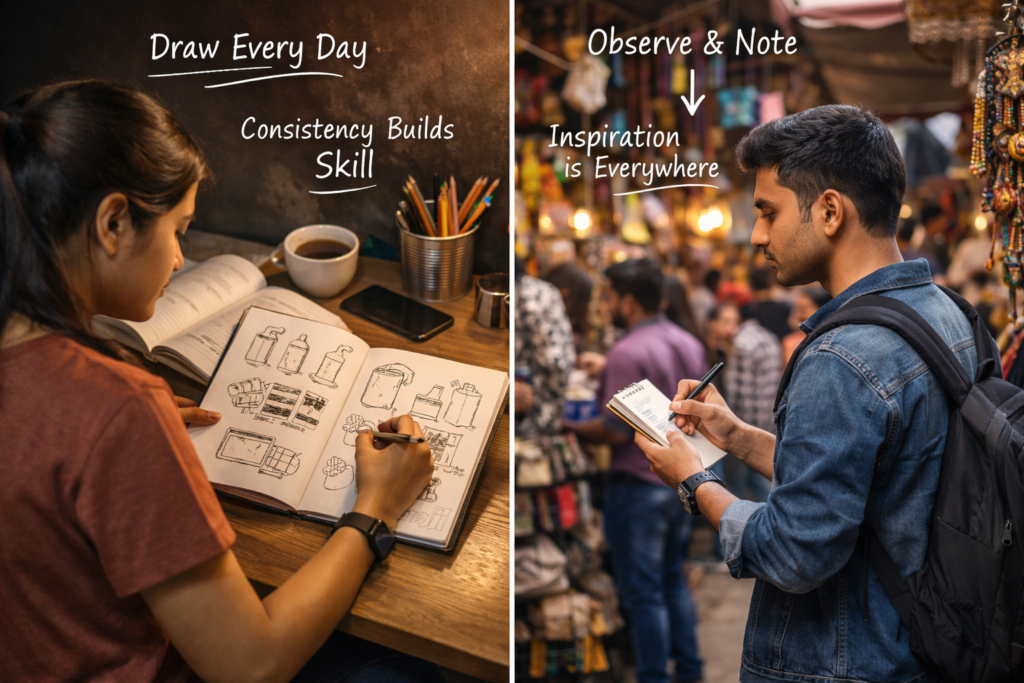
For toppers, observation isn’t passive, it’s active training.
They notice how people carry bags, how children interact with space, how signage fails or succeeds. They question why things are designed the way they are, and whether they should be.
They keep small notebooks. They record clever solutions, awkward designs, daily inconveniences. Over time, this habit sharpens instinct. So when an exam asks for real-world solutions, they don’t struggle. They’ve been preparing all along.
Now this is not what all scholars do, but it is a common link between most of them.
They Use References Without Copying Souls
Toppers study others’ work deeply, but never blindly. They analyze portfolios, previous toppers’ answers, and design principles, not to imitate, but to understand.
They respect tradition. They learn the rules before bending them.
Like old-school craftsmen, they believe originality comes after mastery, not before it. Learning to judge your own artwork helps you question yourself, and questioning yourself leads to better ideas.
They Choose Depth Over Speed
While many students rush to “finish the syllabus,” toppers slow down.
They would rather understand fewer concepts deeply than skim many superficially. They revisit mistakes. They refine ideas. They respect slowness in a fast world.
Finishing the goal should never be the goal at first place. Understanding the goal should be.
What is the use of knowledge that cannot be retained, cannot be applied, and cannot help you further in life?
Learn not just to grasp the syllabus, but to use that knowledge late, for something meaningful and better.
Conclusion — Becoming a Topper Isn’t Becoming Someone Else
Not every scholar follows the same routine. You don’t need to copy someone else’s pattern to score well. Just observe and understand where you are making mistakes that affect your progress.
Here’s the quiet truth: toppers aren’t chasing ranks. They’re building foundations. They don’t aim to impress; they aim to express.
Their preparation isn’t about becoming “the best.”
It’s about becoming honest with their thinking.
Perhaps the most beautiful difference is faith, not blind optimism, but earned trust. Toppers know growth often shows up late. Weeks of effort may feel invisible, until one day everything clicks.
They stay.
They continue.
They trust that daily effort compounds.
And it always does.
At Design India Collective, this belief shapes how preparation is approached—slow, thoughtful, and rooted in clarity rather than pressure.
If you’re ready to build your foundation the right way, feel free to Contact Us and start your journey with intention.
Trending FAQs (Design Entrance Exam Aspirants)
1. How do toppers prepare for design entrance exams like NIFT and NID?
Toppers focus on daily practice, observation, and thinking skills rather than last-minute memorisation. They build habits instead of chasing shortcuts.
2. Is drawing talent mandatory to crack design entrance exams?
No. Drawing is a skill, not a talent. Regular practice and clarity of ideas matter more than perfect sketches.
3. How many hours do design entrance toppers study daily?
There is no fixed number. Toppers focus on consistency and quality of practice rather than long study hours.
4. What mindset helps in clearing design entrance exams?
Curiosity over fear. Understanding over speed. Observation over imitation.
5. Can average students become toppers in design entrance exams?
Yes. Most toppers start as average students who stay consistent, patient, and honest with their preparation.