Preparing for design entrance examinations such as NIFT, NID, and UCEED is often a journey filled with creativity, curiosity, and countless hours of practice. While students usually focus on sketching, design aptitude, and problem-solving skills, one area that quietly plays a significant role in these examinations is General Knowledge (GK). From traditional Indian art forms and architectural marvels to historical movements and cultural heritage, GK can often feel like an ocean of information that is difficult to navigate and even harder to revise.
Many students begin their preparation enthusiastically, collecting notes, bookmarking articles, and watching educational videos. However, as the exam approaches, revision becomes a challenge. Important facts get buried under piles of material, and students often struggle to remember where they learned something in the first place.
This is where a thoughtfully designed Learning Management System (LMS) can make a remarkable difference. At Design India Collective, the LMS has evolved into much more than a digital platform. For many aspirants, it becomes a trusted companion throughout their preparation journey- a place where learning, revision, and practice come together seamlessly.
The Challenge of General Knowledge Preparation
Unlike subjects with fixed syllabi, GK is constantly expanding. Design entrance examinations test a student’s awareness of the world around them. Questions can emerge from a variety of areas, including:
- Indian art and craft traditions
- Architecture and monuments
- Historical events
- Design movements
- Cultural heritage
- Current affairs
- Innovation and technology
- Environmental awareness
The sheer variety of topics can feel overwhelming. Students often wonder whether they have covered enough material or whether they are focusing on the right areas.
A common mistake is studying GK passively. Reading pages of information without a clear revision strategy often leads to poor retention. Effective preparation requires repeated exposure to concepts, organized resources, and easy access to revision materials.
Why an LMS Changes the Learning Experience
One of the greatest strengths of the LMS at Design India Collective is that it brings everything together in one organized space.
Instead of juggling multiple notebooks, websites, PDFs, and videos, students can access curated content through a single platform. This creates a smoother learning experience and reduces the stress that often accompanies exam preparation.
More importantly, the LMS supports a cycle of learning and revision. Students are not simply consuming information once and moving on. They can revisit topics whenever needed, strengthening their understanding over time.
This flexibility is particularly valuable for GK preparation, where revision often determines how much information stays in long-term memory.
A Rich Collection of Indian Art and Cultural Knowledge
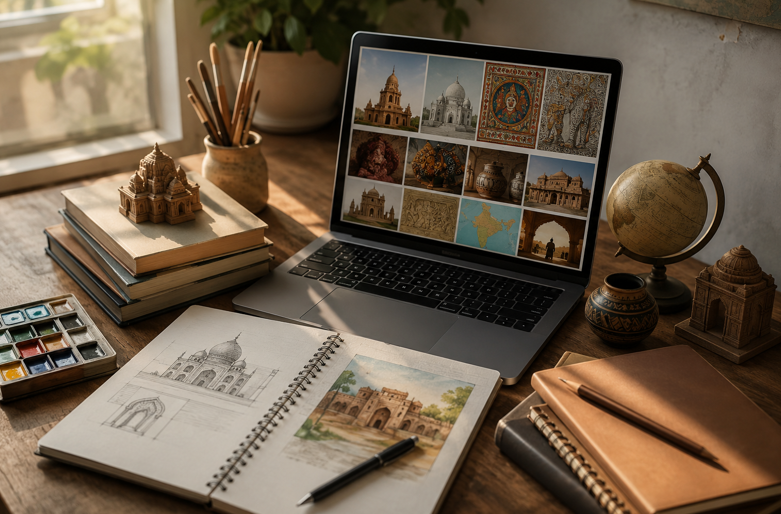
For design aspirants, understanding India’s artistic heritage is essential. Traditional art forms frequently appear in design entrance examinations because they reflect creativity, culture, and visual storytelling. The LMS covers a wide range of Indian art techniques, allowing students to explore and revise topics such as:
- Madhubani Painting
- Warli Art
- Gond Art
- Kalamkari
- Pattachitra
- Phad Painting
- Miniature Art
- Tanjore Painting
Rather than presenting these topics as dry facts, the platform encourages students to engage with them visually and contextually. This makes learning feel more meaningful and memorable. LMS by Design India Collective provides great help in practising and learning such concepts.
Many students discover that revisiting these topics through the LMS helps them retain details far better than simply reading from textbooks.
Exploring Architecture Beyond Memorization
Architecture is another area that can seem intimidating at first. There are countless monuments, styles, and historical influences to remember. The LMS simplifies this process by organizing architectural knowledge into structured modules.
Students can learn about:
- Mughal Architecture
- Dravidian Temple Architecture
- Indo-Islamic Structures
- Colonial Buildings
- Modern Architectural Developments
- UNESCO Heritage Sites
Because design students are naturally visual learners, seeing architectural styles presented through organized resources makes revision more engaging. Instead of memorizing isolated facts, students begin to understand the stories and design principles behind these structures.
A Reliable Revision Companion
One of the most appreciated aspects of the Design India Collective LMS is its role as a revision hub. Students often spend months learning new concepts. Without revision, much of that knowledge gradually fades.
The LMS allows learners to revisit important topics whenever they need a refresher. Whether it is a traditional art form studied three months ago or a historical concept covered earlier in the year, everything remains accessible.
This continuous availability creates confidence. Students know they can return to important lessons at any time instead of searching through scattered notes.
Learning at Your Own Pace
Every student learns differently. Some grasp historical concepts quickly but need more time with architecture. Others may enjoy art-related topics while struggling with current affairs.
A good LMS respects these differences. At Design India Collective, students can revisit lessons as many times as needed. There is no pressure to learn everything perfectly on the first attempt.
This self-paced approach encourages deeper understanding and reduces the anxiety that often accompanies competitive exam preparation. Students can build confidence gradually while strengthening weaker areas at their own speed.
Creating a More Organized Preparation Journey
One reason students often feel overwhelmed during exam preparation is the lack of structure. The Design India Collective LMS provides a clear roadmap. Instead of wondering what to study next or whether a topic has been covered, students can follow a well-organized learning path.
This structure helps them stay consistent and motivated throughout the preparation process. Small achievements—completing a module, revising a topic, or mastering a difficult concept—accumulate over time and contribute to greater confidence.
Conclusion
General Knowledge is one of the most expansive yet rewarding aspects of design entrance exam preparation. It introduces students to the richness of Indian art, the brilliance of architecture, the depth of history, and the stories that have shaped our world.
The LMS at Design India Collective serves as more than just a repository of information. It becomes a dependable learning companion, a revision center, and a source of inspiration. By covering a vast range of GK topics – from Indian art techniques and architectural styles to historical developments and cultural heritage, it helps students learn in a structured, engaging, and meaningful way.
Once you will start using the LMS of Design India Collective, you won’t stop! It will help you grow and experience new ways of learning. It will help you recognise your inner potential.